

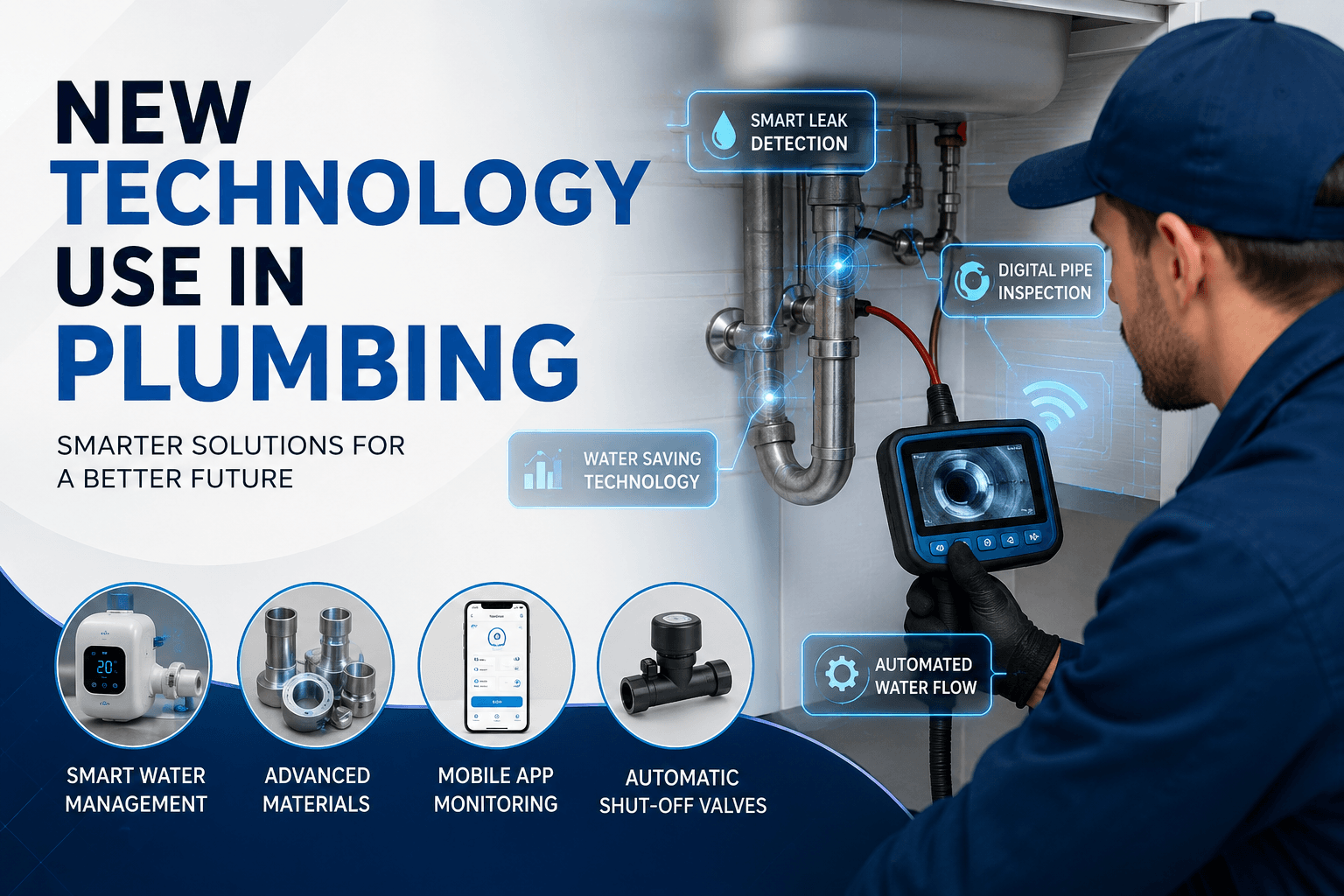
Plumbing is no longer an industry that depends entirely on traditional tools, manual inspection, and guesswork. New technology use in plumbing is changing how professionals detect leaks, inspect pipes, repair underground systems, conserve water, and maintain residential and commercial plumbing networks. From artificial intelligence and smart sensors to robotic inspection equipment and trenchless repair, modern plumbing technology is making everyday services more accurate and less disruptive.
The transformation is especially important as buildings become more connected and water conservation becomes a bigger priority. Modern plumbers can now collect real-time information about plumbing systems and identify problems before they become expensive emergencies.
Smart Leak Detection Technology
One of the most valuable developments in modern plumbing is smart leak detection. Traditional leak detection often required plumbers to investigate visible water damage, damp walls, unusual sounds, or unexplained increases in water consumption. Today, electronic sensors and connected monitoring systems can detect unusual water flow and pressure patterns much earlier.
Smart leak detection devices can be installed near water lines, appliances, and other vulnerable areas. When abnormal activity is detected, some systems can send an alert to a smartphone or connected monitoring platform. This allows homeowners and property managers to respond before a small leak develops into major structural damage.
Artificial intelligence is also becoming useful for pipeline monitoring. Recent research has demonstrated machine-learning approaches for detecting underground water leaks from radar data, while other systems combine acoustic signals, pressure information, and AI to identify and locate leaks.
Artificial Intelligence in Plumbing
Artificial intelligence is gradually becoming a practical tool for the plumbing industry. AI can analyze information collected from sensors, cameras, flow meters, and pressure-monitoring equipment to identify unusual patterns.
For example, an intelligent monitoring system may recognize that a building is consuming more water than normal during periods when nobody should be using it. Instead of waiting for visible damage, the system can flag the unusual activity for investigation.
AI can also support predictive maintenance. Rather than replacing equipment only after it fails, property managers can use collected data to identify components that may require attention. This approach can reduce unexpected breakdowns and help businesses plan maintenance more efficiently.
Camera Inspection of Pipes
High-definition pipe cameras have already changed plumbing inspections. Instead of immediately opening floors, walls, or landscaping, plumbers can insert a small camera into a drainage or sewer line and inspect the interior.
Camera inspections can reveal cracks, root intrusion, blockages, corrosion, damaged joints, and other problems. The recorded footage can also help the plumber explain the condition of the pipe to the property owner.
Modern inspection systems are becoming more advanced as imaging technology and automated analysis improve. AI-based sewer inspection research is also exploring automated identification and segmentation of defects, potentially helping professionals process inspection footage more efficiently.
Robotic Plumbing Inspection
Robotics is another exciting area of new technology use in plumbing. Small robotic systems can travel through pipes and provide information from locations that may be difficult or dangerous for people to access.
Researchers are developing articulated sewer inspection robots capable of navigating narrow pipes and overcoming obstacles such as pipe joints.
For commercial facilities, municipal infrastructure, and complex drainage networks, robotic inspection can reduce the need for extensive excavation and manual investigation. As these machines become smaller and more capable, their use could expand across residential and industrial plumbing applications.
Trenchless Pipe Repair Technology
Traditional underground pipe replacement can require significant excavation. That means removing sections of driveways, roads, gardens, flooring, or landscaping before reaching the damaged pipe.
Trenchless technology provides an alternative in suitable situations. Methods such as cured-in-place pipe lining and pipe bursting can repair or replace underground pipelines while reducing the amount of excavation required.
Cured-in-place pipe technology creates a new pipe inside an existing damaged pipe using a resin-based liner. The result can restore structural integrity without requiring the entire old pipeline to be dug out.
Current industry developments continue to expand trenchless inspection and repair capabilities, with modern systems designed to reduce excavation, disruption, and reinstatement work.
Smart Water Meters and Digital Monitoring
Smart water meters are helping property owners understand exactly how water is being consumed. Instead of relying only on traditional meter readings, connected systems can provide more detailed information about consumption patterns.
This information can help identify unusually high usage, possible leaks, inefficient fixtures, or unnecessary consumption. In commercial buildings, detailed water data can also help facility managers identify areas where conservation measures could produce meaningful savings.
When smart meters are combined with automated alerts, water monitoring becomes more proactive. The goal is not simply to measure consumption but to understand what is happening inside the plumbing system.
Ultrasonic Leak Detection
Ultrasonic technology is becoming increasingly useful for non-invasive plumbing diagnostics. Sensors can listen for sound patterns associated with escaping water or changes occurring inside a pipe.
One advantage of external ultrasonic monitoring is that certain systems can be attached to existing pipes without cutting or significantly modifying them. Current industry deployments are exploring non-invasive ultrasonic monitoring for real-time pipe observation.
For property owners, this technology can potentially reduce the need for destructive investigation and help plumbers narrow down the location of a hidden problem.
Digital Pipe Mapping
Another important development is digital mapping. Knowing exactly where underground plumbing is located can make future repairs much easier.
GPS, GIS, digital drawings, sensors, and advanced inspection equipment can create more accurate records of underground infrastructure. For large properties, commercial facilities, and municipalities, digital mapping can help teams understand pipe locations, connections, maintenance history, and potential problem areas.
New pipeline inspection platforms are also combining leak detection with three-dimensional mapping and pressure profiling, allowing operators to collect several types of infrastructure information during a single inspection.
Water-Saving Plumbing Technology
Technology is not only helping plumbers find problems; it is also helping people use less water.
Modern plumbing fixtures can include low-flow faucets, efficient shower systems, dual-flush toilets, smart irrigation controls, and sensor-operated fixtures. These technologies can reduce unnecessary water consumption while maintaining practical performance.
In commercial environments, touchless faucets and automated flush systems can also improve hygiene while controlling water usage. Smart controls can further optimize consumption according to occupancy and usage patterns.
For homeowners interested in improving efficiency, working with a professional plumbing service can help identify opportunities to upgrade outdated fixtures and improve overall water management.
Advanced Pressure Monitoring
Water pressure provides important information about the health of a plumbing system. Unexpected pressure changes can indicate leaks, blockages, failing components, or other problems.
Modern pressure sensors can continuously monitor a system and provide data that would be difficult to collect through occasional manual checks. When pressure information is combined with flow measurements and AI-based analytics, abnormal conditions may be identified more quickly.
Some advanced pipeline-monitoring systems now combine flow, pressure, temperature, hydraulic modeling, and AI-based analysis for continuous infrastructure monitoring. (USA)
Digital Twins for Underground Plumbing
Digital twin technology is another emerging development. A digital twin is a virtual representation of a physical asset or system that can be updated using real-world data.
For complex underground pipelines, a digital model can potentially show the condition and behavior of different sections of the network. Engineers can use such models to study damage, maintenance requirements, and possible failure scenarios.
Recent research has demonstrated digital-twin frameworks for monitoring damage in rehabilitated underground pipelines, combining sensor information, engineering models, and machine-learning techniques. (ScienceDirect)
Although this technology is currently more common in large infrastructure and engineering applications, its underlying concepts could eventually become more accessible to commercial plumbing systems.
Plumbing Technology and Preventive Maintenance
One of the biggest benefits of modern plumbing technology is the shift from reactive to preventive maintenance.
Traditional maintenance often follows a simple pattern: something breaks, a plumber is called, the problem is diagnosed, and a repair is completed. Smart plumbing systems can provide information before a complete failure occurs.
For example, a gradual change in water pressure, unusual consumption, repeated drainage problems, or abnormal sensor readings may indicate that something needs attention. Detecting these signals early can allow property owners to schedule maintenance instead of dealing with an emergency.
Why New Plumbing Technology Matters
The adoption of technology is important for more than convenience. Water leaks can waste valuable resources and cause serious damage to buildings and infrastructure. Research into automated leak detection demonstrates the potential of modern monitoring technologies to identify hidden problems across large networks while reducing inspection effort. (ScienceDirect)
Technology can provide several practical advantages:
- Faster problem detection
- More accurate diagnosis
- Reduced excavation
- Better water conservation
- Improved maintenance planning
- Less property disruption
- Better documentation
- Increased safety for plumbing professionals
- Potentially lower long-term maintenance costs
However, technology does not eliminate the need for skilled plumbers. Advanced equipment still requires trained professionals who understand building systems, plumbing codes, installation practices, and appropriate repair methods.
The Future of Plumbing Technology
The future of plumbing will likely involve greater integration between sensors, artificial intelligence, robotics, cloud platforms, and traditional plumbing expertise. Smart buildings may continuously monitor water systems, identify unusual patterns, and notify maintenance teams automatically.
Pipeline inspection is also moving toward more comprehensive systems that can combine visual inspection, acoustic information, pressure data, mapping, and automated analytics. Research and commercial developments in 2026 show that these technologies are already progressing beyond simple experimentation. (Water Online)
For homeowners and businesses, the most important consideration is choosing technology that solves a genuine problem rather than adopting technology simply because it is new. A professional assessment can determine whether smart sensors, camera inspection, trenchless repair, water-saving fixtures, or another solution makes sense for a particular plumbing system.
Conclusion
New technology use in plumbing is transforming an industry that has traditionally depended heavily on manual inspection and physical repairs. Smart leak detectors, AI analytics, pipe cameras, robotics, ultrasonic sensors, digital mapping, smart meters, and trenchless repair methods are giving plumbing professionals better ways to diagnose and solve problems.
The biggest change is the move toward smarter and more preventive plumbing. Instead of waiting for a leak, blockage, or pipe failure to become obvious, modern technology can help identify warning signs earlier. As these tools continue to improve, plumbing systems are likely to become more efficient, sustainable, reliable, and easier to maintain.
For property owners, the goal should be simple: use technology where it provides measurable value, combine it with experienced professional service, and focus on preventing small plumbing problems from becoming expensive emergencies.
