

Air pollution has become one of the most pressing environmental challenges facing modern cities. From vehicle exhaust and industrial emissions to dust and other airborne pollutants, urban environments are constantly exposed to substances that affect air quality and public health. As cities continue to expand, finding sustainable ways to reduce pollution has become increasingly important.
While electric vehicles, green buildings, and urban tree planting are often discussed as solutions, another innovative approach is gaining attention: photocatalytic paving materials. These specially designed surfaces can help break down certain air pollutants through a natural process activated by sunlight.
But how exactly do they work, and what role can they play in creating cleaner urban spaces?
Understanding Photocatalytic Paving Stones
Photocatalytic paving stones are specially manufactured construction materials designed to help reduce certain pollutants in the surrounding air. They typically incorporate photocatalytic compounds, such as titanium dioxide (TiO₂), into their surface or composition.
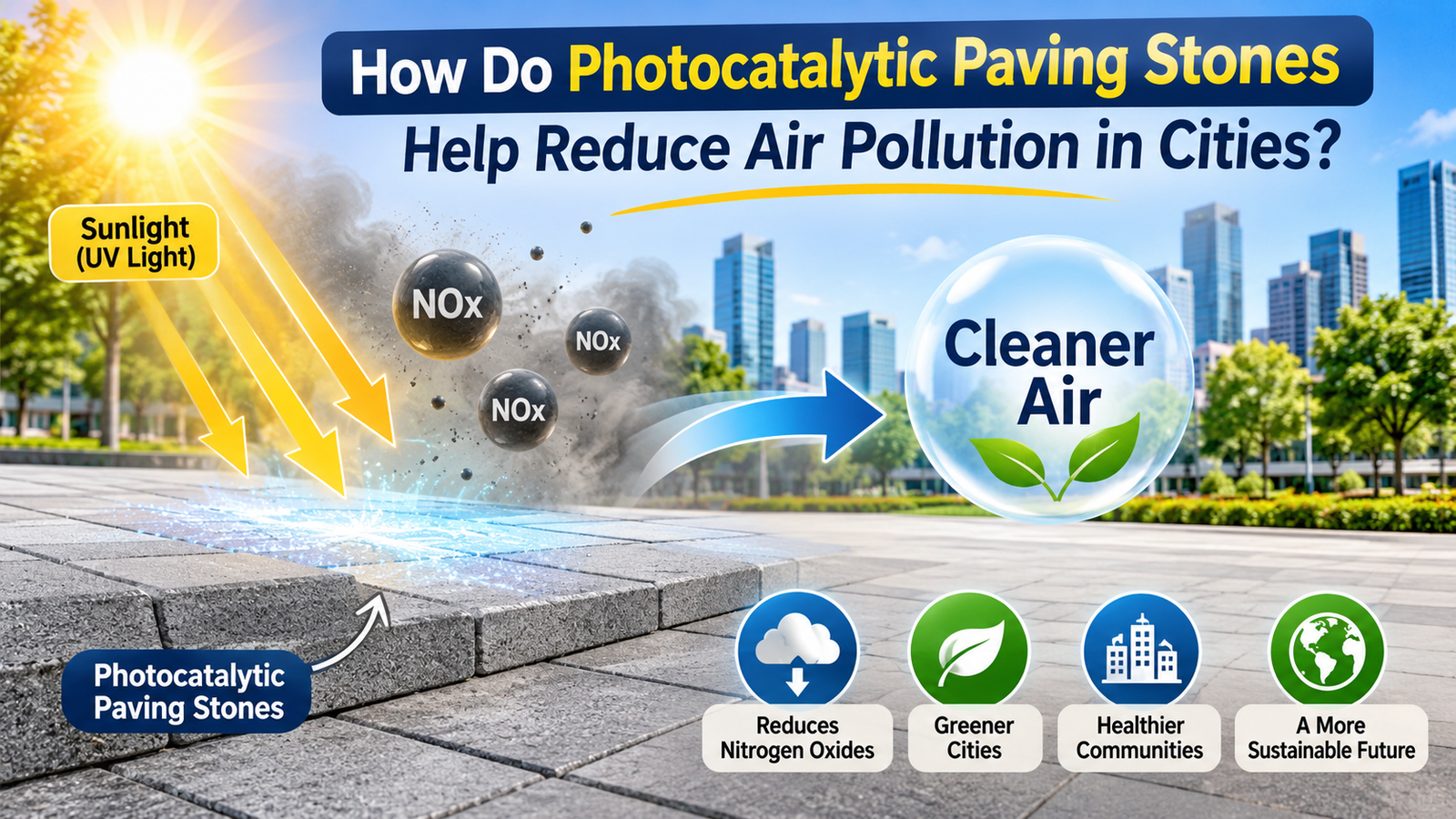
When exposed to ultraviolet light from sunlight, the photocatalyst becomes activated and triggers chemical reactions that help transform certain harmful substances into less harmful compounds.
One of the main pollutants targeted by this technology is nitrogen oxides (NOx), which are commonly produced by vehicle engines and industrial activities. These gases contribute to smog formation and can negatively affect respiratory health.
Unlike conventional paving materials, photocatalytic surfaces do more than provide a durable walking or driving surface. They can also contribute to environmental improvement by using naturally available sunlight to support pollutant degradation.
How Does Photocatalysis Reduce Air Pollution?
The science behind photocatalytic paving stones is based on a process known as heterogeneous photocatalysis.
When ultraviolet radiation reaches a surface containing titanium dioxide, the material becomes activated. This creates highly reactive particles that can interact with certain pollutants in the surrounding air.
The process generally works through several stages:
- Exposure to sunlight: Ultraviolet light activates the photocatalytic compound incorporated into the paving material.
- Chemical reaction: The activated surface generates reactive species that interact with pollutants such as nitrogen oxides.
- Pollutant transformation: Certain nitrogen oxides are converted into nitrate compounds, which can be removed from the surface through rainwater or routine cleaning.
- Surface regeneration: The photocatalytic material remains available to participate in further reactions when suitable light and environmental conditions are present.
This process does not require an external power supply or complex mechanical equipment. Instead, it uses sunlight as its primary energy source, making it an interesting option for sustainable urban infrastructure.
The Main Environmental Benefits of Photocatalytic Paving Stones
Introducing photocatalytic materials into urban infrastructure can offer several environmental advantages, particularly in areas with heavy traffic and limited green space.
1. Helping Reduce Nitrogen Oxide Pollution
Nitrogen oxides are among the major pollutants associated with road traffic. High concentrations can contribute to respiratory problems and the formation of ground-level ozone.
Photocatalytic paving surfaces can help reduce certain nitrogen oxide compounds when environmental conditions support the reaction. Installing these materials in pedestrian areas, public squares, and other suitable urban locations may contribute to broader air-quality improvement initiatives.
2. Supporting Cleaner Urban Environments
Cities contain extensive paved surfaces, including sidewalks, pedestrian zones, public spaces, and roads. Using materials with additional environmental functionality can help make these existing surfaces more beneficial.
Rather than treating paving exclusively as a structural requirement, municipalities can consider materials that combine conventional construction performance with potential environmental benefits.
3. Using Natural Solar Energy
One of the most attractive features of photocatalytic technology is its ability to use sunlight to activate chemical reactions.
Unlike air purification systems that depend on electricity, photocatalytic paving materials do not require a dedicated power supply to activate their basic photocatalytic function. This makes them an interesting option for sustainable construction projects, although their effectiveness depends on sunlight exposure and other environmental conditions.
4. Integrating Environmental Technology into Existing Infrastructure
Photocatalytic materials can be incorporated into different types of urban construction projects. Depending on their technical specifications, they may be suitable for pedestrian walkways, plazas, outdoor public spaces, and other paved areas.
This allows cities to explore pollution-reduction measures without necessarily installing separate air-cleaning equipment throughout public spaces.
5. Complementing Other Sustainable Urban Solutions
Photocatalytic paving stones are not intended to replace essential measures such as reducing vehicle emissions, expanding public transportation, improving energy efficiency, or increasing urban vegetation.
Instead, they can complement these strategies as part of a wider approach to sustainable city planning.
Where Can Photocatalytic Paving Materials Be Used?
The potential applications of photocatalytic paving materials extend across various urban environments.
Pedestrian walkways: Sidewalks and pedestrian routes can incorporate functional paving materials that combine everyday usability with photocatalytic properties.
Public squares and plazas: Large paved areas in city centres provide opportunities to integrate innovative construction materials into public infrastructure.
Commercial developments: Shopping centres, office complexes, and other commercial properties can explore photocatalytic paving as part of their environmental and sustainability initiatives.
Urban redevelopment projects: When municipalities renovate existing streets and public spaces, they can evaluate photocatalytic materials as one possible component of their construction strategy.
The suitability of each application depends on factors such as sunlight exposure, local pollution levels, material specifications, pedestrian or vehicle traffic, and maintenance requirements.
Are Photocatalytic Paving Stones Effective in All Conditions?
Although photocatalytic technology offers promising environmental possibilities, its performance is not identical in every location.
Several factors influence how effectively these materials can help reduce pollutants.
Sunlight availability: Ultraviolet radiation is essential for activating conventional titanium dioxide photocatalysts. Shaded areas or locations with limited UV exposure may experience reduced activity.
Weather conditions: Humidity, rainfall, and temperature can influence photocatalytic reactions and the removal of reaction products from surfaces.
Surface cleanliness: Dust, dirt, and accumulated contaminants may cover active areas and interfere with the photocatalytic process. Regular maintenance can help preserve surface performance.
Pollutant concentration and airflow: The amount of pollution present, wind conditions, and contact time between pollutants and the surface all affect potential results.
For this reason, photocatalytic paving should be evaluated according to the specific environmental conditions of each project. Independent testing and reliable performance data are important when selecting these materials for large-scale applications.
The Role of Innovative Manufacturers in Sustainable Construction
As demand for environmentally responsible construction solutions increases, manufacturers have an important role to play in developing materials that offer more than traditional structural performance.
Companies such as Prefabricados Roda are contributing to this area through specialised paving solutions. Their range of photocatalytic paving stones provides an example of how innovative paving technology can be considered in projects focused on cleaner and more sustainable urban environments.
For architects, urban planners, construction companies, and local authorities, exploring these materials can open up additional possibilities when designing public spaces and infrastructure.
Can Photocatalytic Paving Stones Help Build Cleaner Cities?
The future of sustainable urban development will depend on combining multiple technologies and practical environmental strategies. No single material can eliminate urban air pollution, but innovative construction solutions can contribute to a more comprehensive approach.
Photocatalytic paving stones offer an interesting opportunity to integrate pollution-reducing technology directly into everyday urban infrastructure. By using sunlight to support chemical reactions that transform certain airborne pollutants, these materials can provide an additional environmental function alongside their traditional paving purpose.
As research, product development, and real-world applications continue to evolve, photocatalytic paving could become an increasingly valuable consideration in sustainable construction.
Ultimately, cleaner cities will require coordinated action from governments, manufacturers, urban planners, and communities. Integrating innovative materials into public spaces is one practical way to support that shared objective.
