

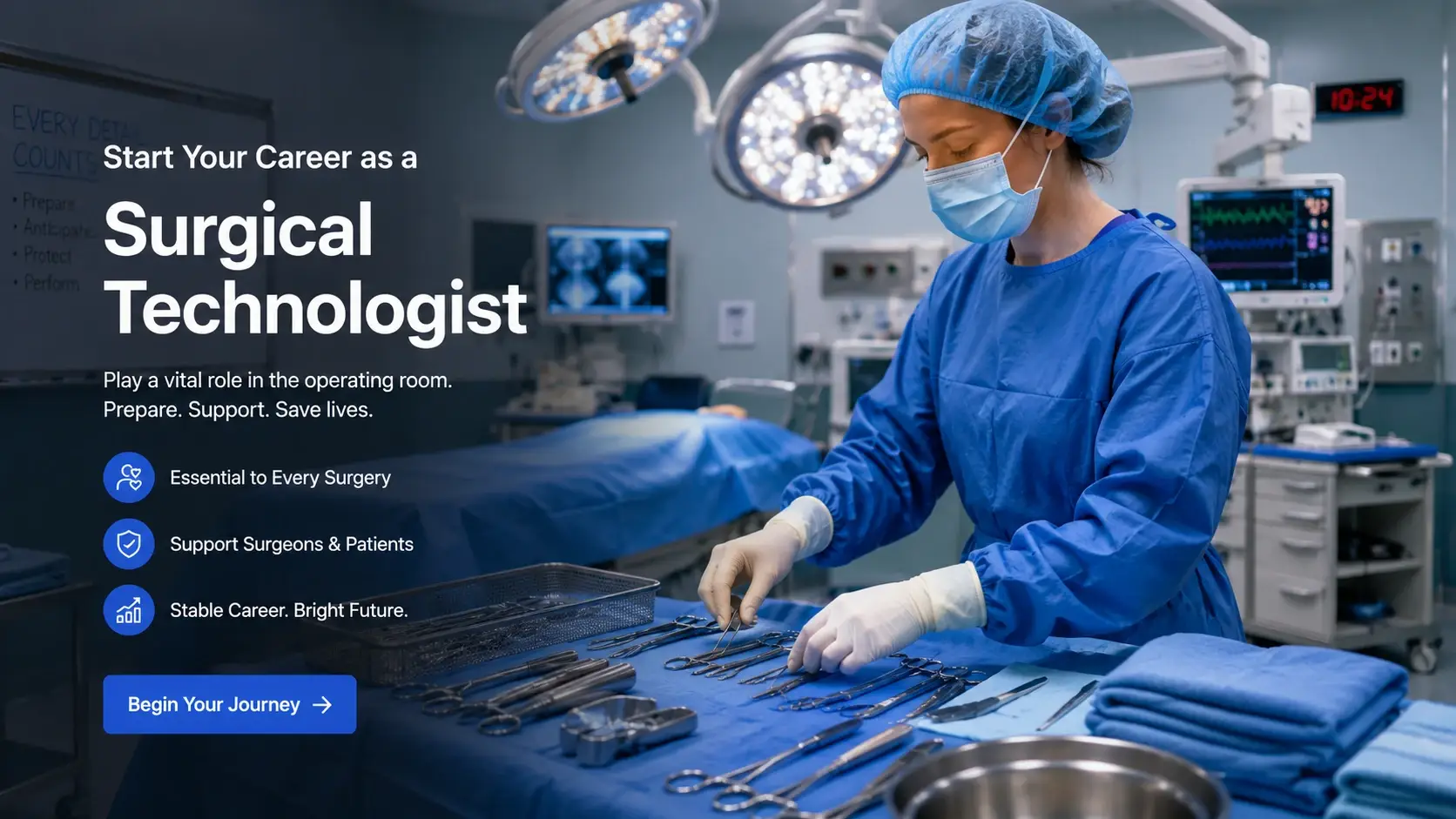
Healthcare depends on many professionals working behind the scenes to keep patients safe. While surgeons and nurses receive much of the attention, surgical techs play a critical role during medical procedures.
A surgical tech, also called a surgical technologist or operating room technician, helps prepare operating rooms, organize surgical instruments, maintain sterile conditions, and support surgeons and other healthcare professionals during procedures.
This career combines medical knowledge, technical skills, attention to detail, and teamwork. For people interested in healthcare but who want a role focused on procedures rather than long-term patient care, becoming a surgical tech can be an attractive option.
What Is a Surgical Tech?
A surgical tech is a healthcare professional who assists surgical teams before, during, and after operations.
Their primary responsibility is to help maintain a safe and organized operating environment. Surgical techs prepare equipment, handle sterile instruments, and assist the surgical team throughout procedures.
Unlike surgeons who perform operations or nurses who provide broader patient care, surgical techs specialize in the technical and procedural side of surgery.
They may work in areas such as:
- General surgery
- Orthopedic procedures
- Cardiovascular surgery
- Emergency operations
- Obstetrics and gynecology procedures
- Specialty surgical departments
What Does a Surgical Tech Do?
A surgical tech performs many tasks that help surgeries run smoothly.
Before surgery, they may:
- Prepare the operating room
- Arrange surgical instruments
- Check equipment availability
- Maintain sterile supplies
- Assist with patient preparation
During surgery, they may:
- Pass instruments to surgeons
- Maintain sterile technique
- Monitor surgical supplies
- Assist with specimen handling
- Support the surgical team
After surgery, they may:
- Count instruments and supplies
- Help clean and organize the operating room
- Prepare equipment for the next procedure
The role requires concentration because even small mistakes can affect patient safety.
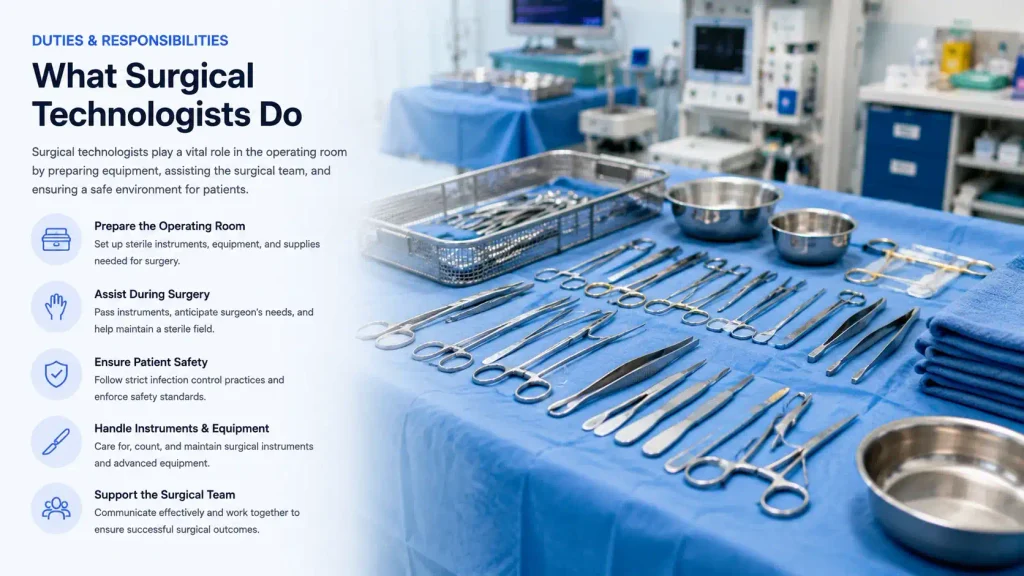
Surgical Tech Responsibilities
The responsibilities of a surgical tech often include:
Maintaining Sterile Technique
Preventing contamination is one of the most important duties. Surgical techs must follow strict infection-control procedures.
Preparing Surgical Instruments
They must understand different instruments and know how they are used during procedures.
Supporting Surgeons
Surgical techs anticipate the needs of the surgical team and provide necessary tools at the correct time.
Managing Supplies
They track surgical materials and ensure required items are available.
Working With Healthcare Teams
Successful surgeries require communication between surgeons, nurses, anesthesiologists, and surgical technicians.
How to Become a Surgical Tech
The path to becoming a surgical tech usually involves education, practical training, and professional development.
Common steps include:
Step 1: Complete High School Education
Students interested in this career should focus on science subjects such as:
- Biology
- Anatomy
- Chemistry
- Health sciences
Step 2: Complete a Surgical Technology Program
Most employers prefer candidates who complete an accredited surgical technology program.
Programs may include:
- Classroom instruction
- Laboratory practice
- Clinical experience
Step 3: Gain Clinical Experience
Hands-on training allows students to practice surgical procedures in real healthcare environments.
Step 4: Consider Certification
Professional certification may improve employment opportunities depending on employer requirements and location.
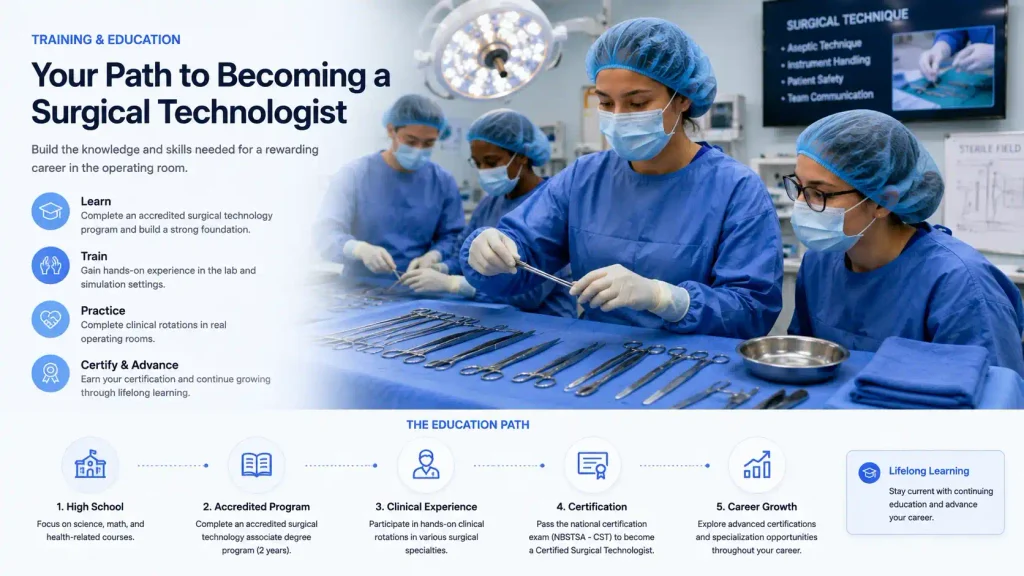
Surgical Tech Education and Training
Surgical technology programs are commonly offered through:
- Community colleges
- Technical schools
- Healthcare training institutions
Students typically learn:
- Medical terminology
- Human anatomy
- Surgical procedures
- Sterilization methods
- Patient safety
- Surgical equipment handling
Clinical training is especially important because surgical techs must apply classroom knowledge in real operating rooms.
Surgical Tech Certification
Certification demonstrates professional knowledge and commitment to the field.
Certification requirements vary by organization and location, but may involve:
- Completing an approved education program
- Passing an examination
- Maintaining continuing education requirements
Some employers prefer certified surgical technologists because certification can demonstrate competency in surgical practices.
Candidates should check current requirements from recognized certification organizations and local employers.
Skills Needed to Become a Surgical Tech
A successful surgical tech needs a combination of technical and personal skills.
Attention to Detail
Operating rooms require accuracy. Surgical techs must carefully track instruments, supplies, and procedures.
Communication Skills
Clear communication helps surgical teams work safely and efficiently.
Ability to Work Under Pressure
Surgeries can be stressful environments. Surgical techs must remain focused during urgent situations.
Organization
Preparing equipment and maintaining sterile environments requires strong organizational skills.
Physical Stamina
The job often involves standing for long periods during procedures.
Surgical Tech Work Environment
Most surgical techs work in hospitals, but opportunities may also exist in:
- Outpatient surgery centers
- Specialty clinics
- Medical facilities
The operating room environment is highly structured. Surgical techs usually follow strict safety procedures and work closely with different healthcare professionals.
Work schedules may include:
- Regular daytime shifts
- Evening hours
- Emergency call schedules
- Weekend availability
Schedules depend on the employer and type of surgical department.
Surgical Tech Salary and Career Outlook
Surgical tech salaries vary depending on factors such as:
- Location
- Experience
- Education
- Certification
- Employer type
- Specialty area
According to labor market information from government and professional sources, healthcare support careers continue to be influenced by demand for medical services and surgical procedures.
People interested in this career should research current salary information in their region because compensation differs significantly by location.
Pros and Cons of Being a Surgical Tech
| Pros | Cons |
| Work in healthcare without becoming a physician | Can involve stressful situations |
| Shorter training path than many medical careers | Long periods of standing |
| Important role in patient care | Requires strict attention to safety |
| Opportunities for specialization | May require irregular schedules |
Is Surgical Tech a Good Career Choice?
Surgical technology can be a rewarding career for people who enjoy healthcare, teamwork, and hands-on technical work.
It may be a good fit for individuals who:
- Like medical environments
- Work well under pressure
- Prefer structured procedures
- Want a healthcare career with focused training
However, it may not be ideal for people who dislike blood, stressful situations, or standing for extended periods.
Before choosing this career, prospective students should research training programs, job opportunities, certification expectations, and local healthcare demand.
Frequently Asked Questions
What is a surgical tech?
A surgical tech is a healthcare professional who assists surgical teams by preparing operating rooms, managing instruments, and supporting procedures.
How long does it take to become a surgical tech?
Training time varies by program. Many surgical technology programs can be completed in around one to two years, depending on the institution and credential pathway.
Do surgical techs perform surgery?
No. Surgical techs assist surgeons and maintain the operating environment, but they do not perform surgical procedures independently.
Is surgical tech a stressful job?
The role can be stressful because surgical techs work in environments where accuracy and patient safety are extremely important.
Do surgical techs need certification?
Certification requirements vary by employer and location. Many employers prefer or require professional certification.
Where do surgical techs work?
Surgical techs commonly work in hospitals, outpatient surgery centers, and specialized medical facilities.
What skills are important for surgical techs?
Important skills include attention to detail, communication, organization, teamwork, and the ability to remain calm under pressure.
Conclusion
A surgical tech is an essential member of the healthcare team who helps make surgical procedures safe and efficient. The career combines medical knowledge, technical skills, and teamwork in a fast-paced environment.
For individuals interested in healthcare, surgical technology offers a focused career path with opportunities to develop specialized skills. Before entering the field, students should research accredited programs, certification options, and employment requirements in their area.
