

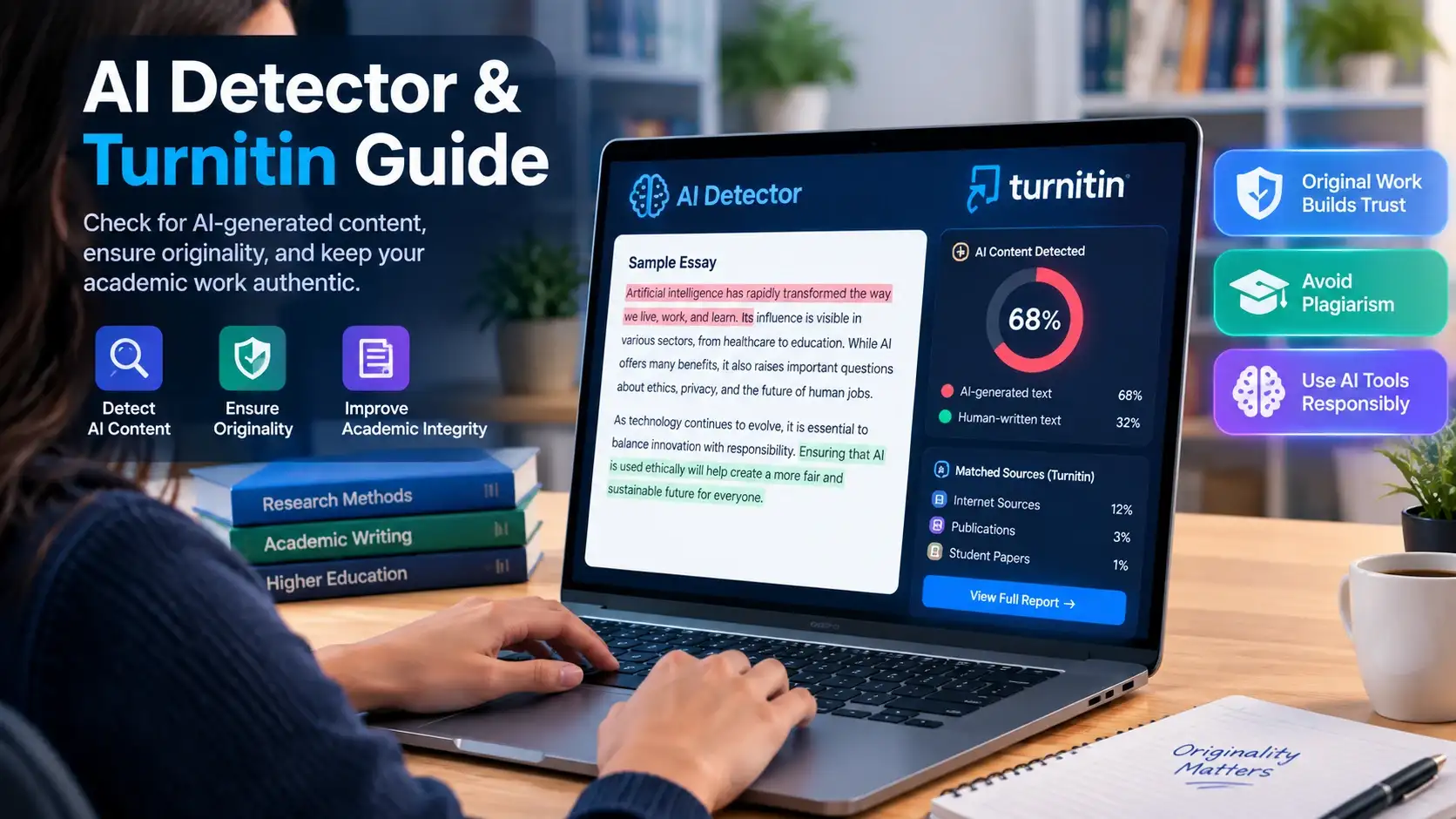
Artificial intelligence writing tools have changed how people create content, complete assignments, and communicate online. As AI-generated text becomes more common, schools, universities, and organizations are looking for ways to understand whether written work was created by humans, AI systems, or a combination of both.
The AI detector Turnitin is one of the tools designed to help educators identify writing that may have been generated by artificial intelligence. Turnitin is widely known for plagiarism checking, but its technology has expanded to include AI writing detection capabilities.
This guide explains what Turnitin’s AI detector is, how it works, its features, accuracy considerations, limitations, and how students and educators can use AI responsibly.
What Is the AI Detector Turnitin?
The AI detector Turnitin is a feature designed to analyze written content and estimate whether parts of a document may have been generated using artificial intelligence.
Turnitin originally became popular as a plagiarism detection platform that compares submitted work against databases of academic papers, websites, and other sources. With the growth of generative AI tools, Turnitin introduced AI writing detection features to help educators review possible AI-generated content.
The tool does not simply search for copied text. Instead, AI detection systems analyze patterns commonly associated with machine-generated writing.
These patterns may include:
- Sentence structure
- Writing consistency
- Language patterns
- Predictability of word choices
- Other signals associated with AI-generated text
An AI detection score should generally be viewed as an indicator for further review rather than automatic proof of AI use.
How Does Turnitin AI Detection Work?
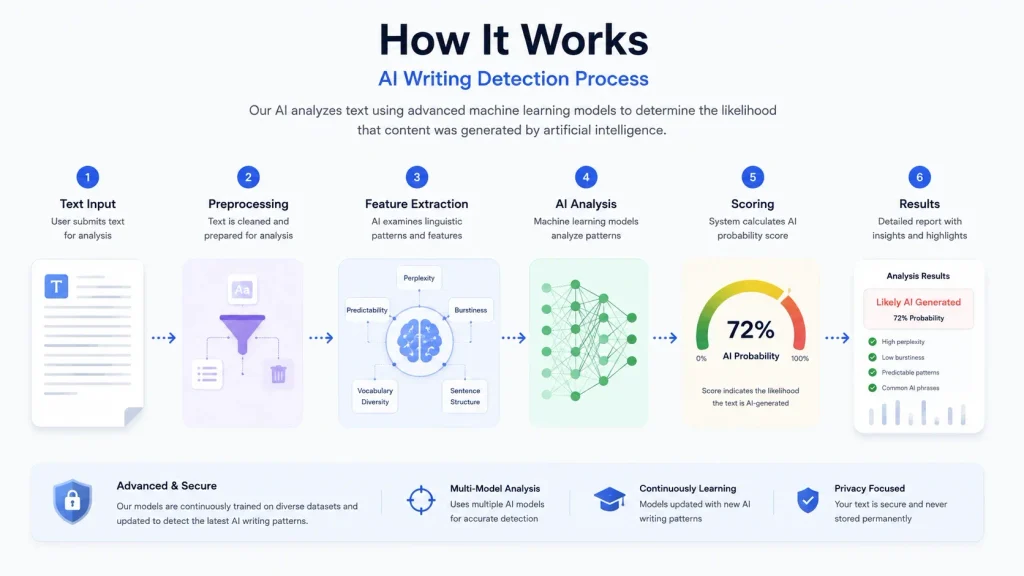
Turnitin’s AI detection technology uses machine learning models trained to recognize differences between human-written and AI-generated text.
The process generally involves several steps:
1. Text Analysis
The system analyzes submitted writing and examines language patterns throughout the document.
2. Pattern Recognition
AI detection models look for characteristics that may appear more frequently in AI-generated writing, such as highly predictable phrasing or consistent sentence patterns.
3. AI Writing Probability Estimate
The system produces an indicator showing the amount of text that may have characteristics associated with AI-generated content.
4. Human Review
Educators can use the result as one piece of information alongside:
- Student writing history
- Drafts and revisions
- Classroom discussions
- Assignment requirements
A detection result should not replace human judgment.
Why Are Schools Using AI Detection Tools?
The increased availability of generative AI has created new challenges for education.
Students can now use AI tools to:
- Generate essays
- Summarize information
- Rewrite paragraphs
- Create research outlines
- Improve grammar
These tools can support learning, but they can also create concerns about academic integrity when students submit AI-generated work as their own without permission.
Schools use AI detection tools to encourage:
Academic Integrity
Institutions want students to demonstrate their own understanding, research ability, and writing skills.
Fair Assessment
Teachers need ways to evaluate whether assignments represent a student’s own work.
Responsible AI Usage
Many educators are moving toward policies that allow certain AI uses while requiring transparency.
Turnitin AI Detector Features
The AI detector Turnitin provides several features designed for educational environments.
AI Writing Analysis
The tool examines submitted text and identifies sections that may have characteristics of AI-generated writing.
Integration With Academic Workflows
Turnitin is commonly integrated into learning management systems used by schools and universities.
Similarity Checking
Turnitin also provides plagiarism-related features that help compare student submissions against existing sources.
Educator Review Tools
Teachers can review reports and combine detection results with their knowledge of student performance.
Support for Academic Policies
Institutions can use detection information when developing academic integrity procedures.
How Accurate Is the Turnitin AI Detector?
The accuracy of AI detection tools is one of the most discussed topics surrounding AI writing analysis.
AI detectors can provide useful signals, but they are not perfect.
Several factors can affect detection results:
Human Writing Style
Some human-written content may appear similar to AI-generated writing because it uses formal language, predictable structures, or common academic patterns.
AI-Assisted Editing
Content created by a person and improved with AI tools may be difficult to classify.
Different AI Models
AI systems continue to evolve, which means detection methods must also adapt.
Short Text Samples
Short documents may provide fewer signals for analysis compared with longer writing samples.
For these reasons, educators generally benefit from using AI detection results as part of a broader evaluation process.
AI Detection vs Plagiarism Detection in Turnitin
Although both features are related to academic integrity, AI detection and plagiarism detection work differently.
| Feature | AI Detection | Plagiarism Detection |
| Main purpose | Identify possible AI-generated writing | Find matching text from existing sources |
| Looks for | Writing patterns and AI signals | Similar phrases and copied content |
| Output | AI writing indicator | Similarity report |
| Main users | Educators and institutions | Students, teachers, researchers |
A paper can be original but AI-generated, or copied but written by a human. These are separate issues.
Turnitin AI Detector for Students
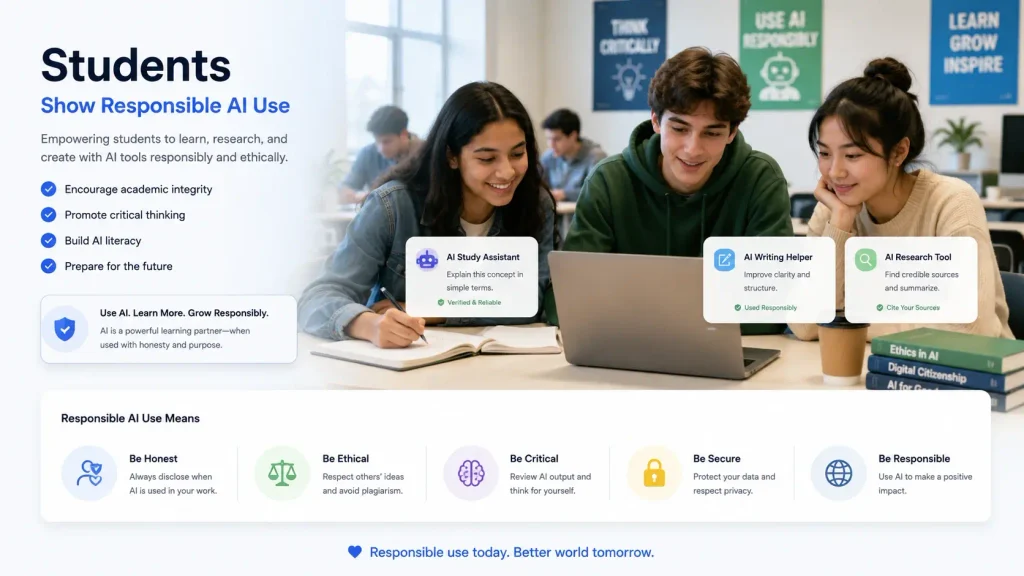
Students often search for “AI detector Turnitin” because they want to understand how their assignments may be evaluated.
Students should focus on creating authentic work by:
Keeping Drafts
Saving outlines, notes, and drafts can demonstrate the writing process.
Understanding Assignment Rules
Different institutions have different AI policies.
Some allow AI assistance for brainstorming or editing, while others restrict AI-generated submissions.
Using AI as a Learning Tool
AI can help with:
- Brainstorming ideas
- Explaining difficult concepts
- Improving grammar
- Creating study questions
However, students should ensure their final work reflects their own understanding.
Turnitin AI Detector for Teachers and Institutions
Educators can use AI detection tools as part of a larger academic review process.
Helpful practices include:
- Discussing AI policies clearly
- Teaching responsible AI usage
- Reviewing unusual changes in writing style
- Requesting drafts or explanations when needed
AI detection works best when combined with teaching strategies rather than used as the only decision-making tool.
Limitations of AI Writing Detection
AI detectors have several important limitations.
False Positives
A false positive occurs when human-written content is incorrectly identified as AI-generated.
False Negatives
A detector may fail to identify AI-generated content, especially when text has been heavily edited.
Changing Technology
Generative AI models continue improving, making detection a constantly changing challenge.
Lack of Context
A detection score cannot fully understand:
- Student learning progress
- Assignment context
- Writing development
- Intent behind AI usage
Human evaluation remains important.
How to Use AI Responsibly in Education
AI can be valuable when used ethically.
Responsible AI practices include:
Use AI for Support
Students can use AI for learning assistance rather than replacing their own thinking.
Verify Information
AI-generated answers may contain mistakes, so users should check important information.
Follow Institutional Rules
Always follow school or university policies regarding AI use.
Maintain Transparency
When required, students should disclose AI assistance.
Turnitin AI Detector Alternatives
Several AI detection tools exist, each with different approaches.
Possible alternatives include:
- Other academic integrity platforms
- AI writing analysis tools
- General content detection systems
When comparing tools, consider:
| Factor | Why It Matters |
| Accuracy testing | Shows reliability limitations |
| Privacy policy | Protects submitted content |
| Integration options | Supports workflows |
| Reporting features | Helps interpretation |
No AI detector should be considered completely accurate in every situation.
Frequently Asked Questions
What is the AI detector Turnitin?
The AI detector Turnitin is a feature that analyzes written content for patterns that may indicate AI-generated text. It is designed to help educators review possible AI writing.
Does Turnitin detect ChatGPT?
Turnitin’s AI detection feature is designed to identify writing patterns associated with AI-generated text, including content potentially produced by generative AI systems. Detection results should be interpreted carefully.
Is Turnitin AI detector 100% accurate?
No AI detector can guarantee perfect accuracy. Results may include errors, so educators should combine detection information with other evidence.
Can Turnitin detect AI-edited writing?
AI-edited writing may be more difficult to classify because human and AI contributions can overlap.
Can students use Turnitin AI detector themselves?
Access depends on whether a school, institution, or organization provides access.
Should teachers rely only on AI detection scores?
No. AI detection results should support, not replace, professional judgment and evaluation of student work.
Conclusion
The AI detector Turnitin is designed to help educators understand whether submitted writing may contain AI-generated content. As artificial intelligence becomes more common in education, tools like Turnitin provide additional information for academic integrity decisions.
However, AI detection is not a perfect solution. Writing style, editing methods, document length, and evolving AI technology can influence results. The most effective approach combines technology with human review, clear policies, and responsible AI education.
Students and educators can benefit from AI when they understand its capabilities, limitations, and ethical considerations.
